CREATURES by Elizabeth Adams, Rachel Urkowitz, Elizabeth Tolson, and Michelle Weinberg
On View March 19 through April 25, 2026
What is a creature? Something unfamiliar, suggestive of a living being, a curiosity and a question, the manifestation of a dream or a nightmare. In the collected works of these four artists, inanimate objects suggest a secret life force with the potential to jump, ooze, or shudder into action. Embracing chance operations, found materials, and multiple processes, these artists defamiliarize the textures and patterns of the quotidian and play with the chaotic disturbances of inner lives, the imprint of city streets, and hidden lives of domestic spaces. Are these vaudeville stages, runaway lab experiments, night clubs, or crime scenes? Whatever the answer, for each artist, “creation” is a mode of play and a realm in which creatures manifest in unexpected and mysterious ways.
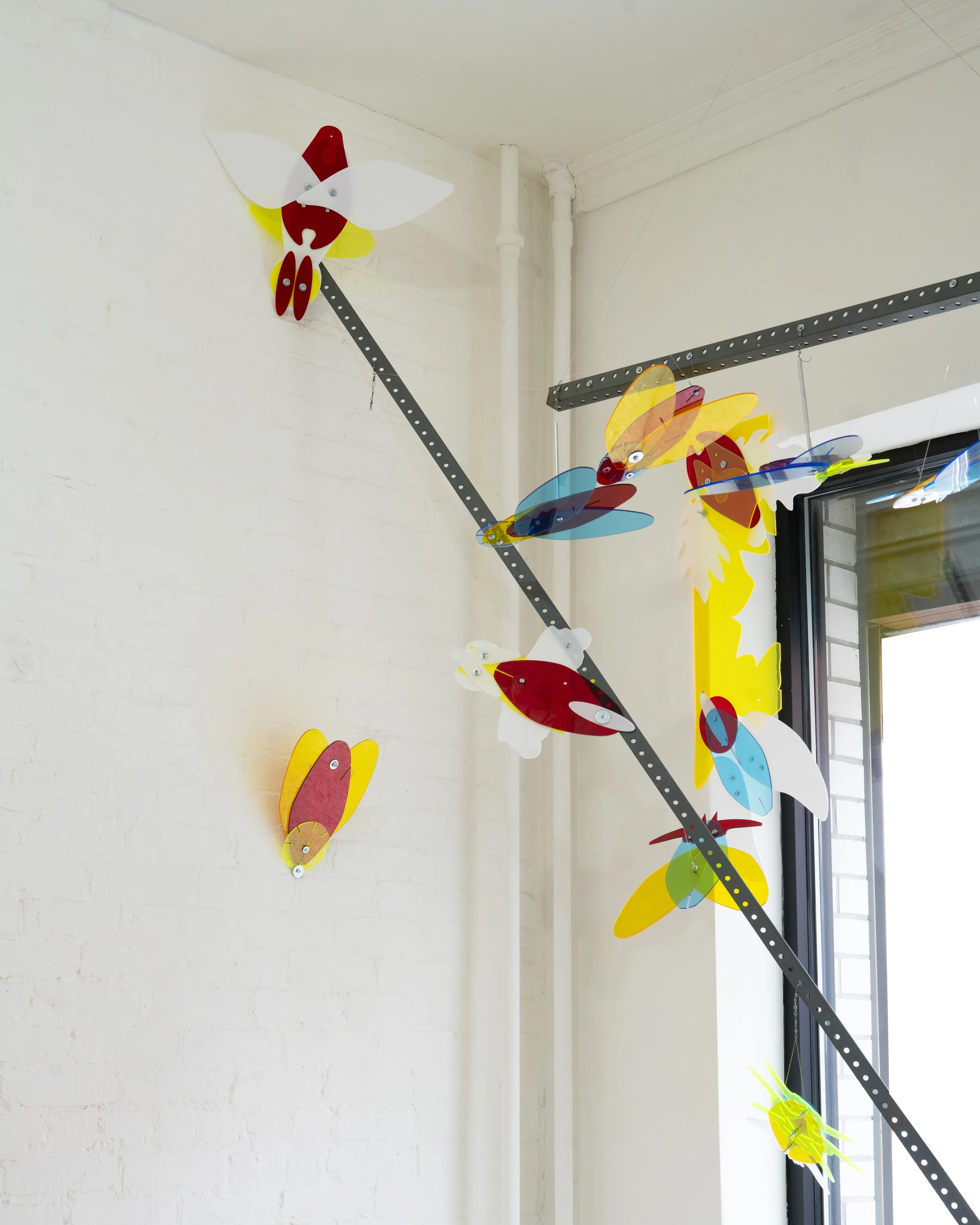
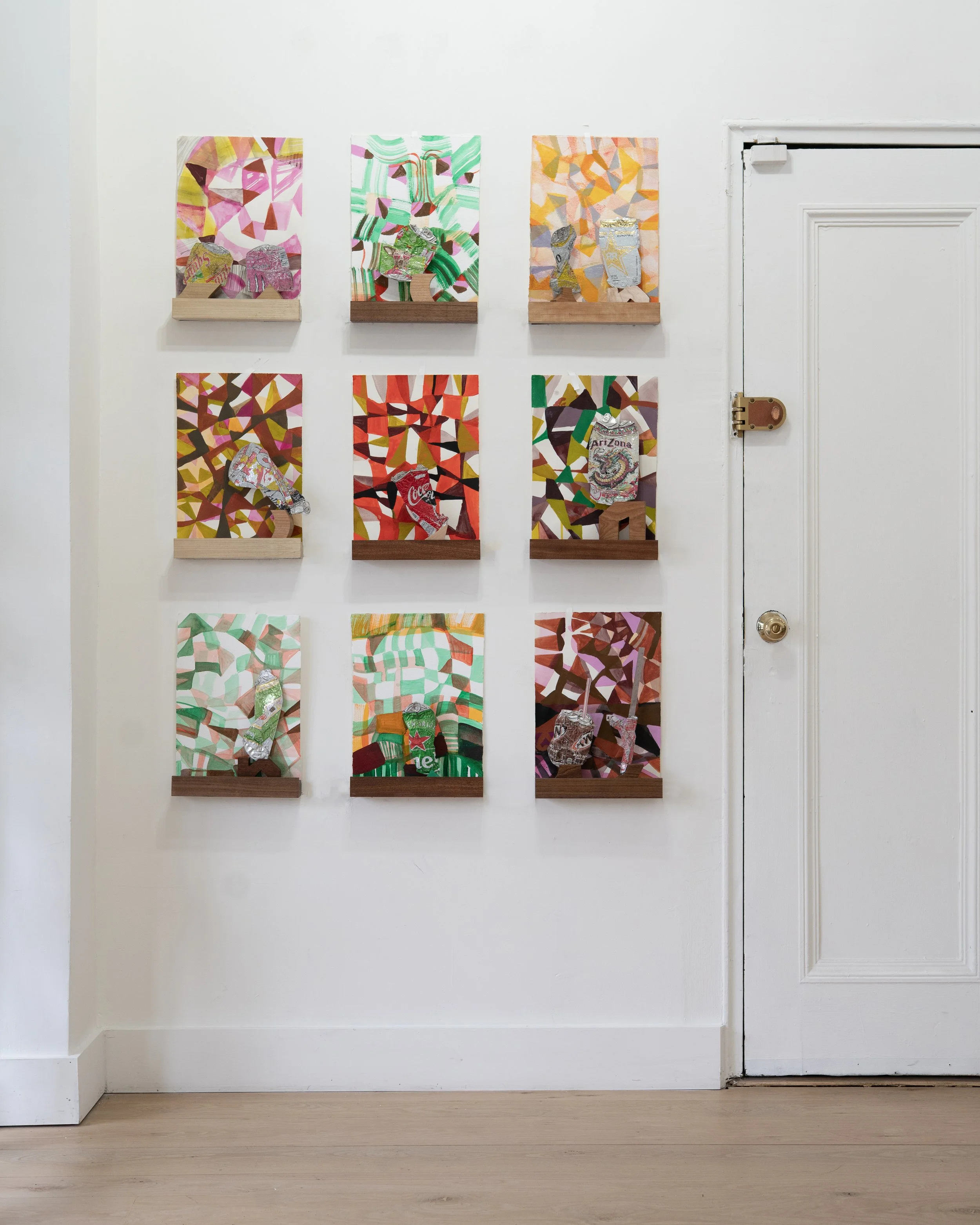
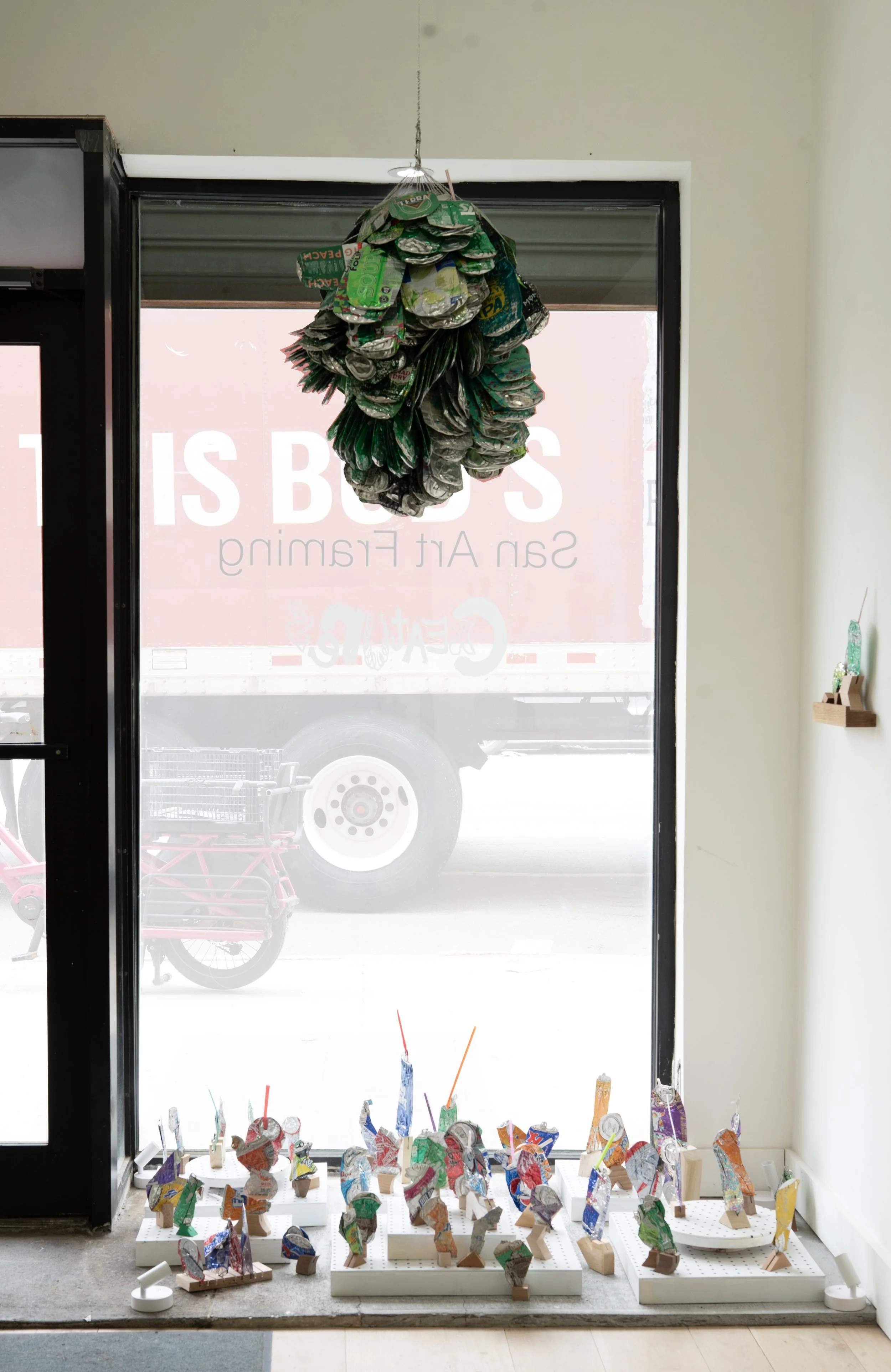
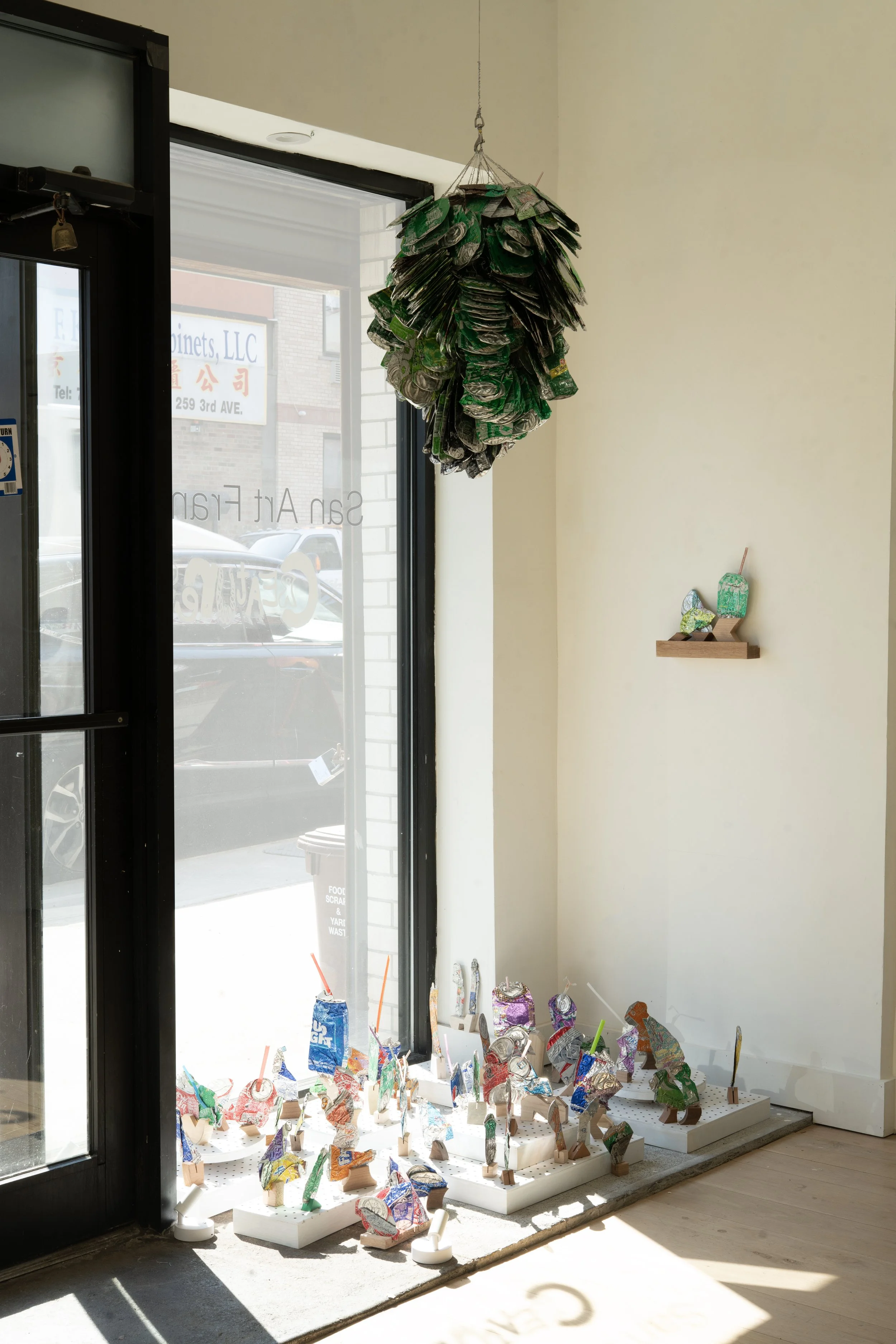
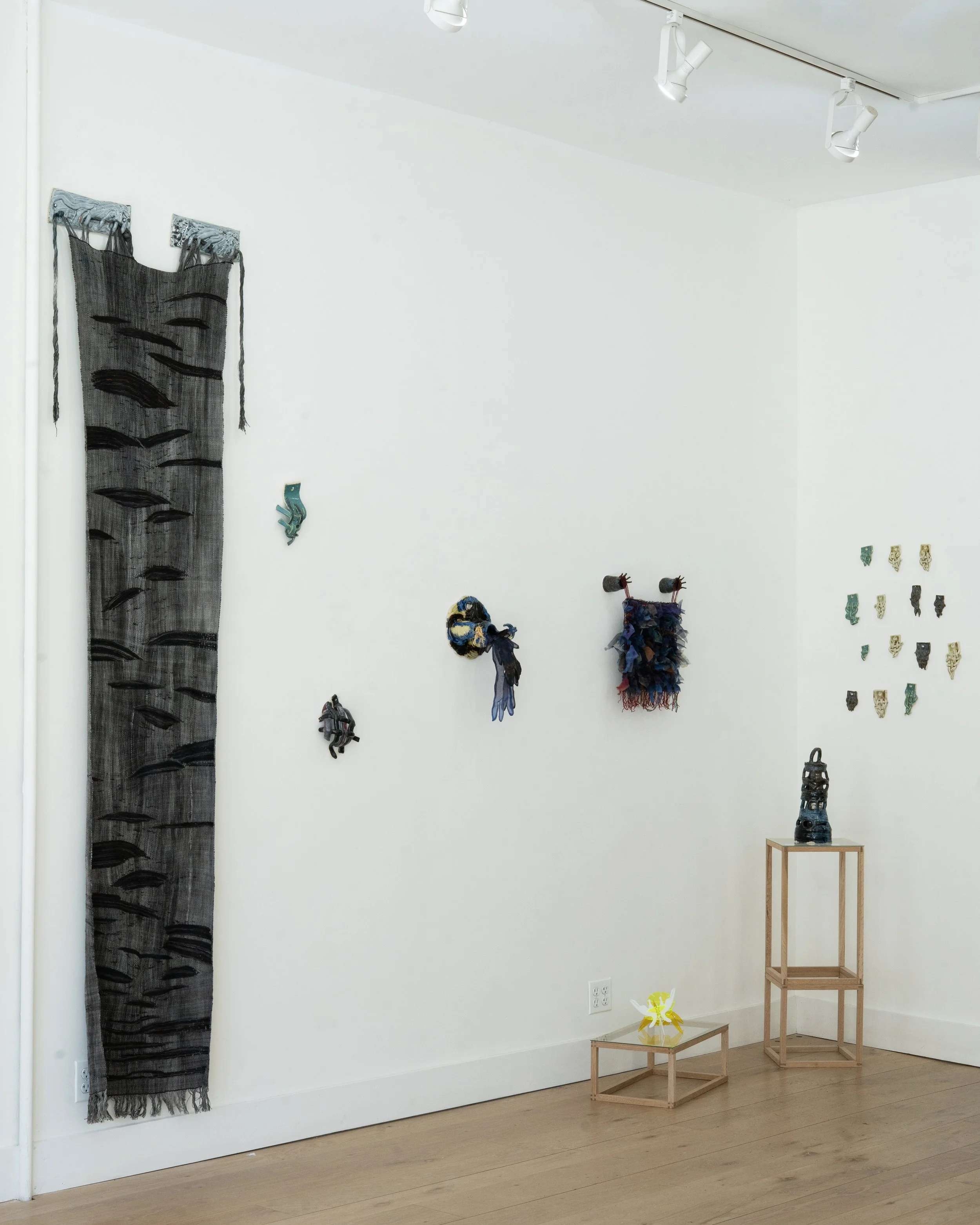
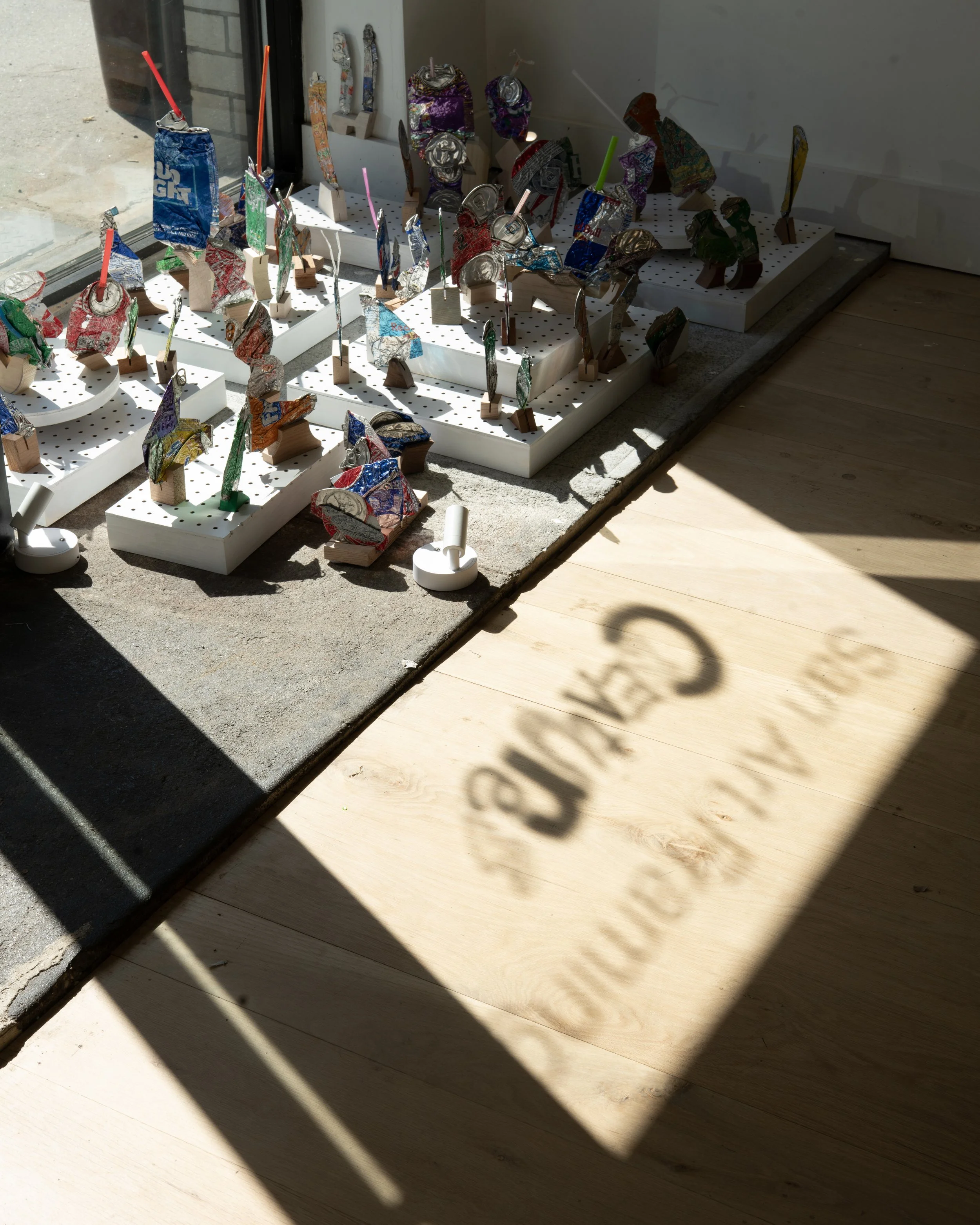
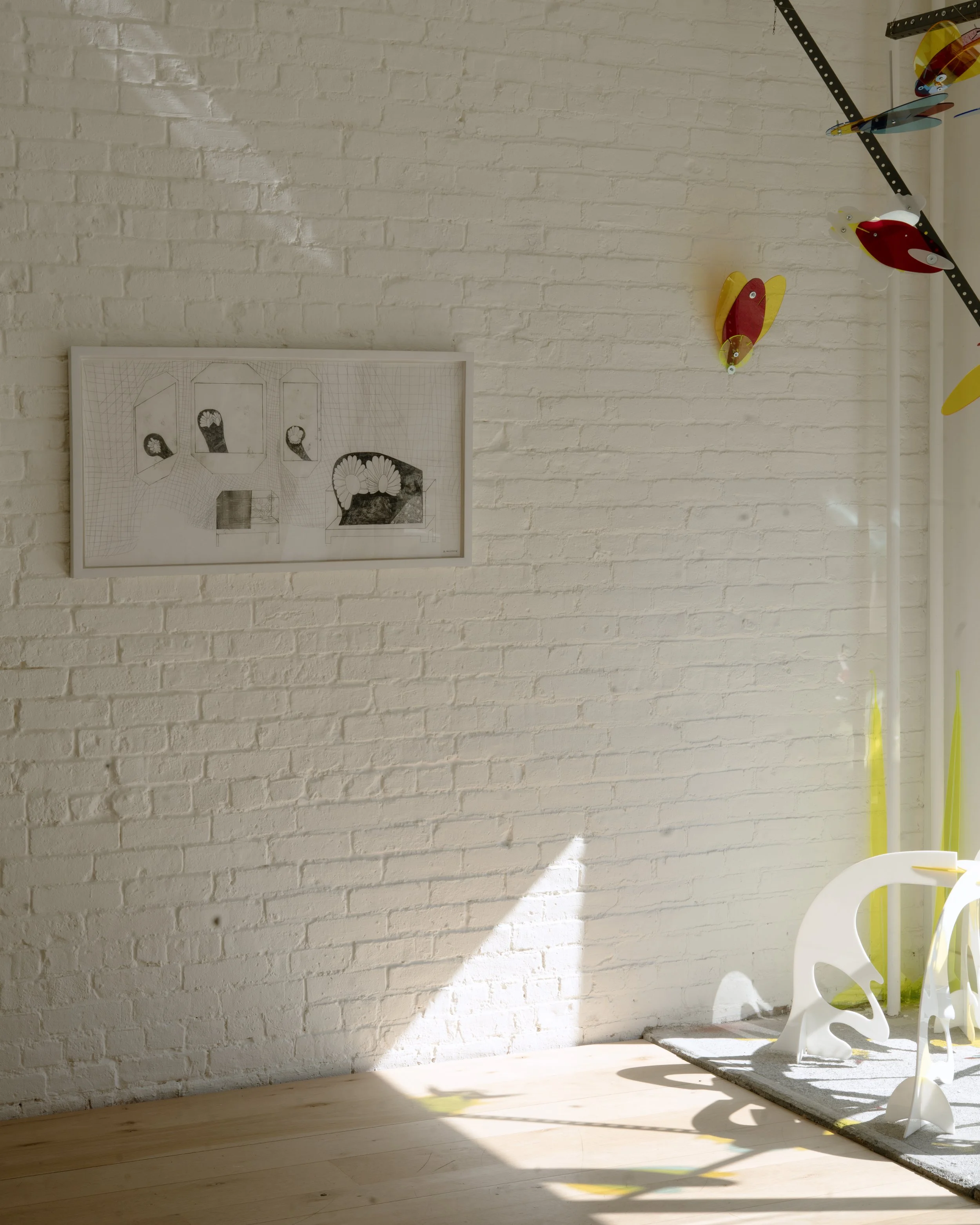
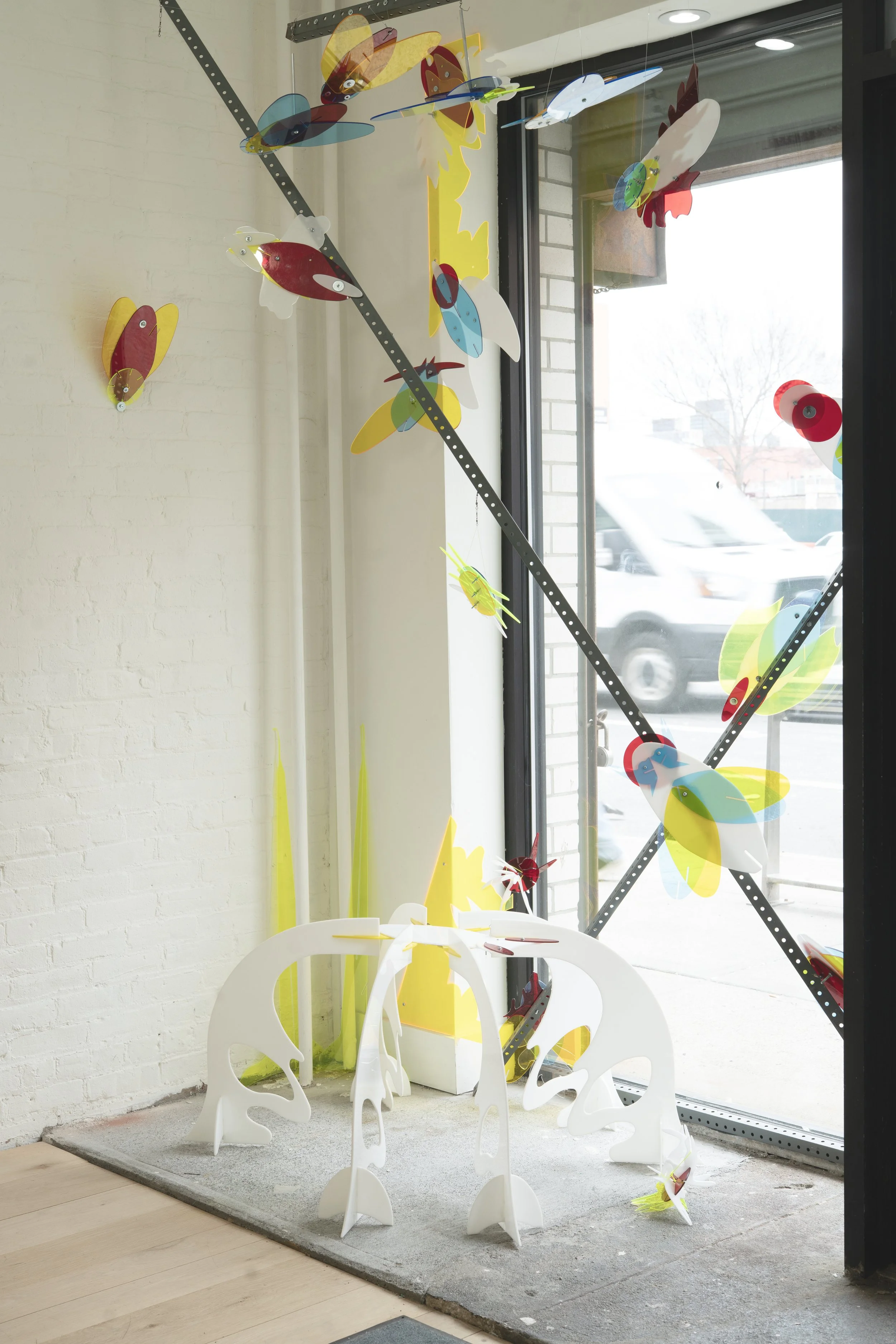
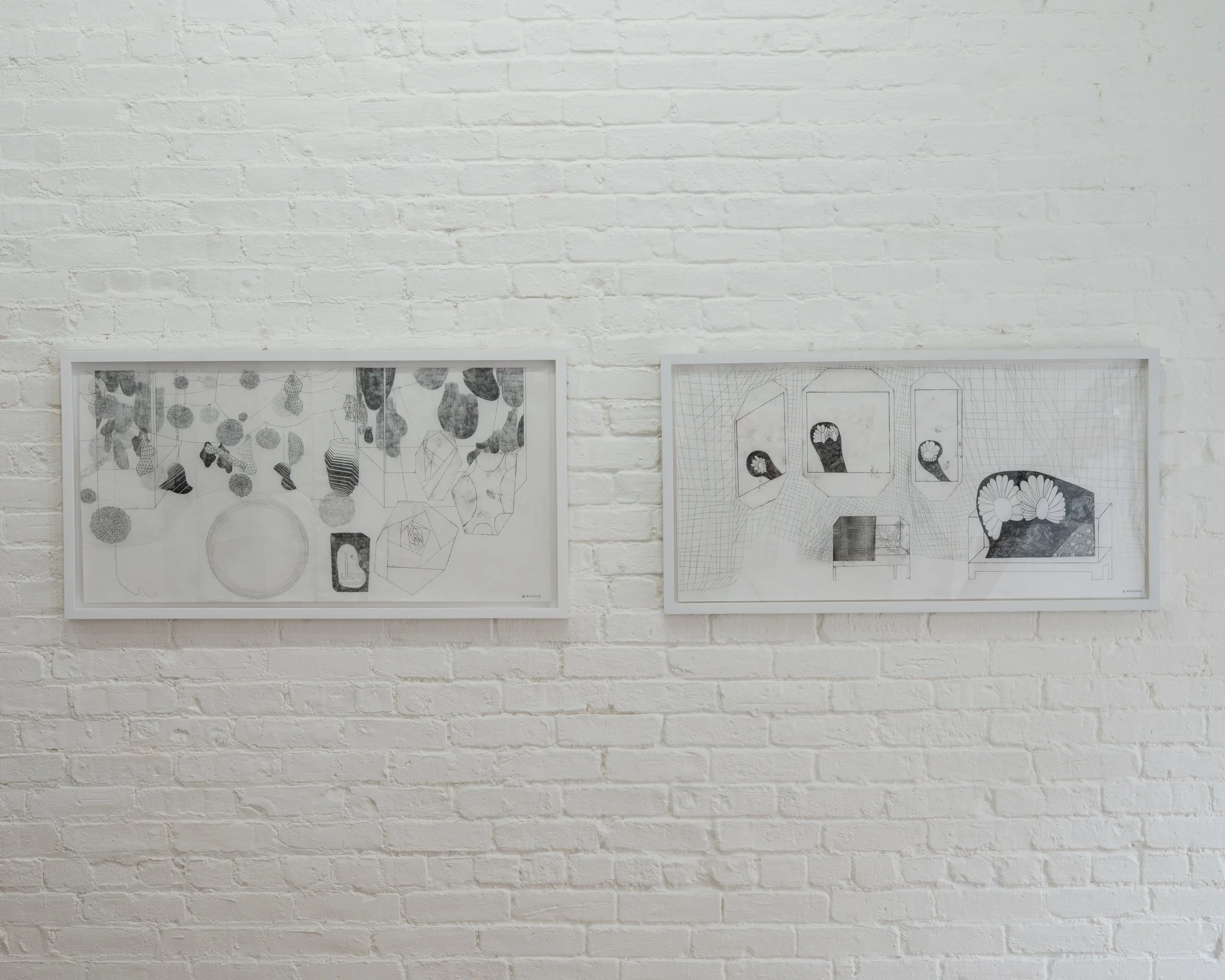
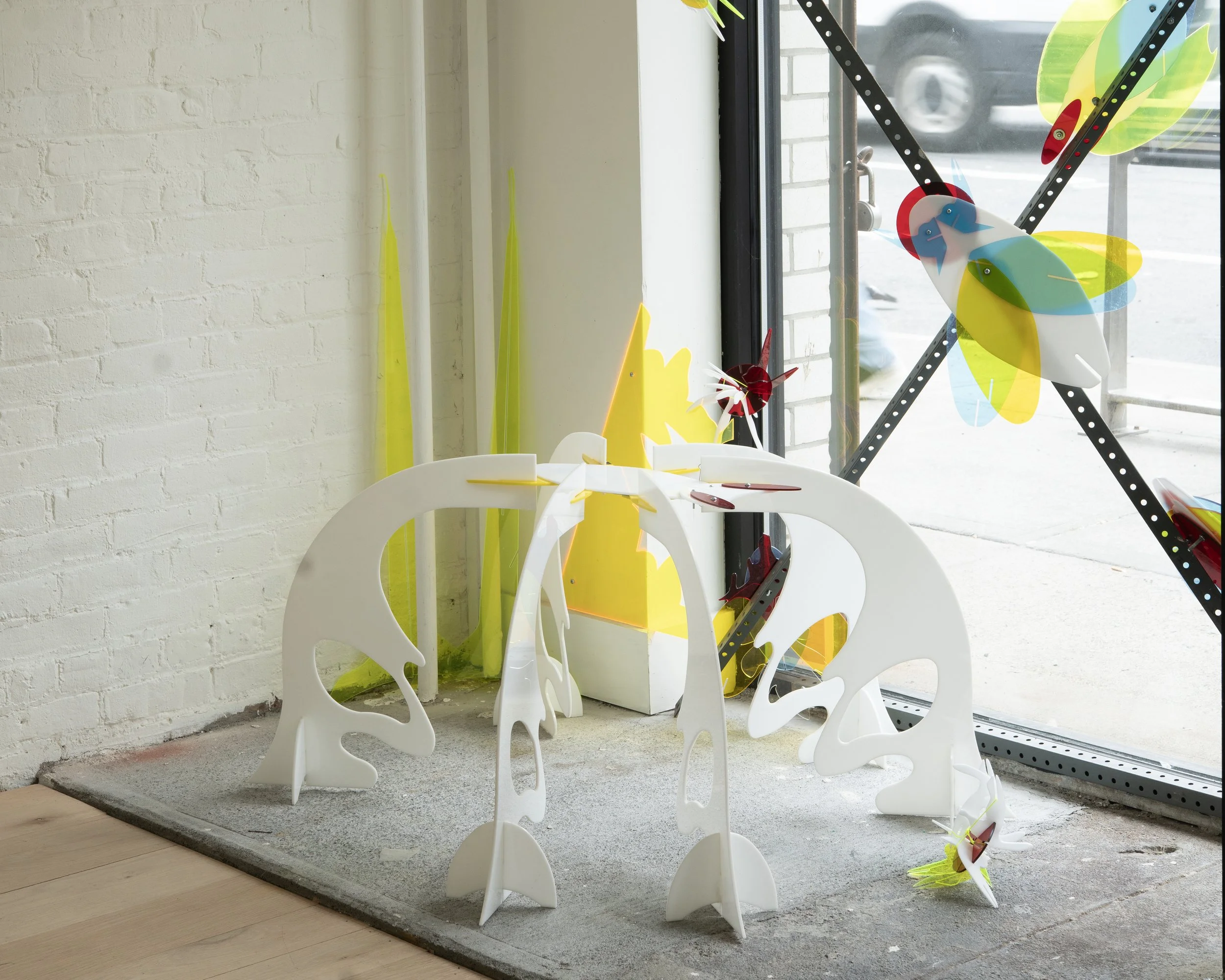
Elizabeth Adams collects flattened cans from the streets of New York CIty to explore surprising transformations of the discarded. Her work mines the limitless possibilities of objects whose 3D uniformity has been compressed into 2D specificity. For Adams, the gutter is lush with figuration and abstraction -- strokes of paint, disco dancers, pure geometry. The results exude latent histories of early mornings and late nights; thirst and longing; pleasure and addiction; profit and loss; getting “trashed” and also letting go. Elizabeth Tolson's ceramic and textile based wall sculptures seem to be making themselves, through weaving, reaching, dripping and hanging. Drawing from personal narrative and the body’s lived experiences, her weavings and ceramics reflect on the spaces we inhabit, internally and between one another. Ceramic finger-like protrusions grasp woven spillage and the body, though missing, has left an imprint. Rachel Urkowitz's insectoids conjure a weird anatomy hacked from articulated industrial plastic and hardware. Insects appear, as if in dreams, their moving parts assign mysterious powers and their evolutionary stages suggest new states of being and becoming. Michelle Weinberg's carbon transfer drawings invert the normal or direct way of drawing, by inscribing on the back of the paper. She describes this as a pseudo printing process: the used carbon papers are her negatives. With her conscious drawing intentions hidden as she marks, each work is a collaboration with chance, a wayward drift that engenders a new place of invention, learning and growth. From this process, figures emerge from habitats, as if stepping onto a stage.